


Nigerian Army Colonel Mohammed Ma’aji has revealed why he became involved in an alleged plot to overthrow President Bola Ahmed Tinubu’s government.
He cited insecurity, corruption, economic hardship and concerns about the welfare of military personnel as the reason for the coup plot.
Fresh court documents reviewed by PREMIUM TIMES showed how the alleged plan was discussed, funded and later revived before security agencies disrupted it in September 2025.
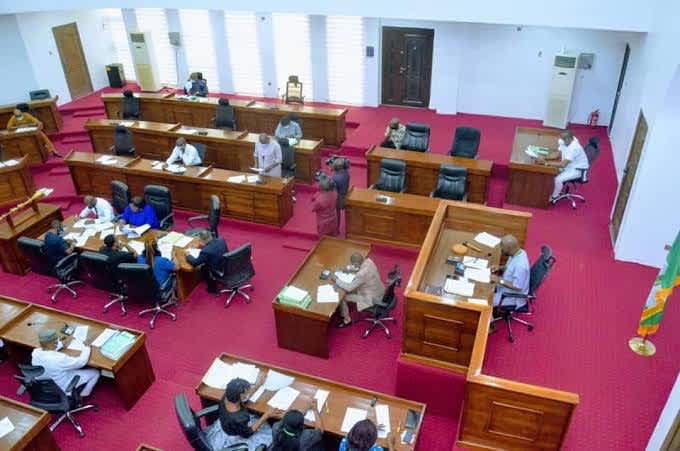

Ma’aji is among several serving military officers currently facing proceedings before a General Court Martial over the alleged plot.
Six retired military personnel and civilians are also being prosecuted separately at the Federal High Court in Abuja.
All the defendants have denied wrongdoing.
In a statement attributed to Ma’aji during interrogation, he said discussions about military intervention began in 2023, towards the end of former President Muhammadu Buhari’s administration.
He said the discussions were driven by concerns about the worsening security situation, corruption, poor governance and the growing economic difficulties facing Nigerians.
Ma’aji said he and others believed the country was heading towards a dangerous situation and began identifying military officers who shared their concerns about the state of the nation.
According to his account, the initial plan did not progress because the group lacked sufficient funds, manpower and logistics.
He claimed that he personally financed many of the activities by selling some of his properties and receiving contributions from some members.
He reportedly sold three houses in Kaduna State and a student hostel at Ahmadu Bello University, Zaria, to raise money for activities linked to the group.
The alleged movement was later revived after Ma’aji failed to secure promotion to brigadier general for the second time in 2024.
He said some officers contacted him after the failed promotion and urged him to bring back the plan.
Lieutenant Colonel Shamsuddeen Bappah was identified as one of those who allegedly pushed for the revival.
The documents said Bappah travelled from Ibadan to Abuja to meet Ma’aji and discuss the matter.
He was also said to have considered selling a plot of land in Bauchi to raise funds, although the property was reportedly not sold.
Following the revival, meetings were allegedly held at different locations in Abuja, including Brookville Hotel and Greenland Hotel in Lokogoma.
Ma’aji said the meetings involved some of the officers who had been part of the earlier discussions, while additional people were also introduced.
He, however, denied that his failed promotion was the main reason behind the alleged plan.
Instead, he pointed to several national policies and problems, including fuel subsidy removal, naira reforms, taxation, electricity tariffs, corruption and insecurity.
He also referred to the #EndSARS and #EndBadGovernance protests, saying the demonstrations showed the level of frustration among many Nigerians over unemployment, economic hardship and poor living conditions.
The colonel also raised concerns about the welfare of members of the armed forces. He complained about military salaries, the treatment of wounded soldiers, housing, healthcare and the condition of retired personnel.
He said he was particularly troubled by the situation of soldiers who sustained injuries during operations and were allegedly left without adequate support.
The documents further revealed allegations that the group attempted to recruit more officers, soldiers and civilians.
Some individuals were reportedly contacted through existing relationships, while meetings were used to discuss possible roles within the alleged movement.
Ma’aji also spoke about an alleged proposal to mobilise members of the Civilian Joint Task Force from the North-East.
He said the idea was to bring personnel to Abuja, although the plan was not fully developed.
He maintained that there was no fixed date for the alleged coup because the group was still trying to obtain more resources and recruit additional personnel.
According to his account, the alleged operation was expected to take place at night and involved plans to place some senior military officials under arrest.
However, he said the preparations had not reached the point of execution when security agencies intervened.
Ma’aji named several serving and retired officers while discussing the alleged movement.
He also denied the involvement of some people mentioned in the investigation and said certain officers had only been informed about the discussions.
The alleged plot came under security investigation after Ma’aji was arrested on September 29, 2025, shortly before the Federal Government cancelled the October 1 Independence Day parade.
He was subsequently interrogated between October 18, 2025, and February 19, 2026, according to the records cited in the investigation.
The Defence Headquarters initially described the detention of the officers as an internal process aimed at maintaining discipline within the military.
It later confirmed that an alleged plot had been uncovered and said officers found culpable would face military judicial proceedings.
By February, about 40 serving and retired military personnel, police officers and civilians had reportedly been arrested or questioned in connection with the investigation.
In April, the Federal Government filed 13 charges against six defendants at the Federal High Court in Abuja.
Those charged include retired Major-General Mohammed Ibrahim Gana, retired Navy Captain Erasmus Ochegobia Victor, Police Inspector Ahmed Ibrahim, Presidential Villa electrician Zekeri Umoru, Bukar Kashim Goni and Islamic cleric Abdulkadir Sani.
The defendants pleaded not guilty.
Several serving officers, including Ma’aji, are facing separate court-martial proceedings.
The admissibility of statements obtained during the investigation has also become an issue in the cases.
Some defendants have challenged the statements attributed to them, arguing that they were not made voluntarily.
The prosecution has rejected the claims and maintained that the proper procedures were followed.
The court consequently ordered a trial-within-trial to determine whether the disputed statements were made voluntarily before deciding whether they could be used as evidence.
Meanwhile, former Bayelsa State governor Timipre Sylva has denied allegations that he financed the alleged plot.
Sylva, who served as Minister of State for Petroleum Resources under Buhari, said through his spokesperson that he had no involvement in planning or providing logistics for any coup attempt.
Five people linked to him are facing separate charges over allegations that they concealed his whereabouts, while nine properties associated with him are under an interim forfeiture order.
The allegations contained in Ma’aji’s statement remain subject to judicial proceedings, and the defendants are presumed innocent until proven guilty by the courts.