



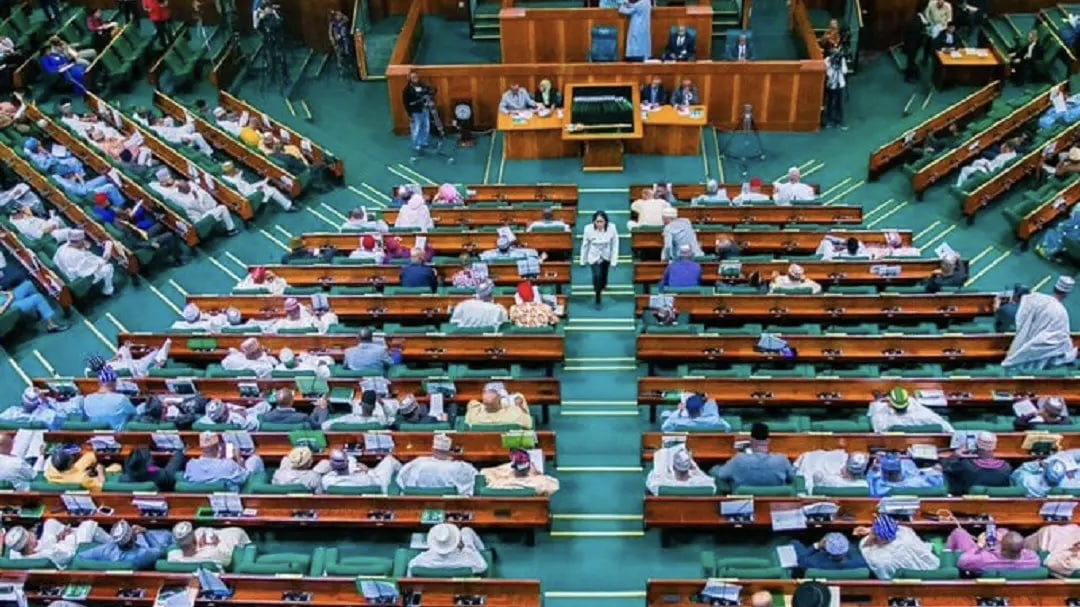
Some members of the House of Representatives on Tuesday staged a walkout in protest against moves surrounding the Electoral Act Amendment Bill 2025.
They accused other lawmakers of pushing partisan interests ahead of electoral integrity.
The tension began after the House rescinded its December passage of the amendment bill to address identified inconsistencies and recommitted it to the Committee of the Whole for clause-by-clause consideration. Deliberations, however, quickly turned contentious.



At the heart of the dispute was Clause 60(3), which provides for both real-time electronic transmission and manual transmission of election results.
Rep. Bamidele Salam had moved a motion seeking the deletion of the provision allowing manual transmission, arguing that results should be transmitted electronically without exception. The motion was seconded by Minority Leader, Rep. Kingsley Chinda.
When put to a voice vote, the “nays” prevailed, retaining both manual and electronic transmission in the bill, a development that triggered visible anger among minority lawmakers.
Earlier, Speaker Tajudeen Abbas had also ruled in favour of a motion to reverse the earlier passage of the bill despite louder “nays,” a decision that sparked protests and led to an executive session that failed to resolve the matter.
Upon resumption, some lawmakers prevented Deputy Speaker Benjamin Kalu from continuing proceedings before eventually walking out of plenary.
Addressing journalists after the walkout, Chinda said the minority could not support any provision that, in their view, opens the door to manipulation.
“Our position is that elections shall and should be transmitted electronically,” he declared. “We are against any clause that would give room for micro-manipulation, rigging, or leeway for any untoward act.”
He disclosed that the minority proposed that in the event of any conflict between manually collated Form EC8A results and electronically transmitted results, the electronic version should prevail.
“Those positions were torn down,” he said. “And we are aware that they were torn down by members of the APC, not on grounds of patriotism, but on grounds of political party affiliation.”
Chinda explained that the walkout was intended to formally register their objection. “For us, after what happened on the floor, we felt it was better to register our position with Nigeria, which is the court of public opinion. So we had to leave the plenary. We had to walk out to address you,” he stated.
The minority also opposed Clause 84, which deals with primary elections and methods of candidate nomination by political parties.
“Our position remains that the method of selection of candidates should be an internal party affair. Political parties should be allowed to determine what method they want to adopt in selecting candidates that will represent them,” Chinda said.
Despite the protest, the House proceeded with the amendments, setting the stage for heightened political debate ahead of the 2027 general elections.