


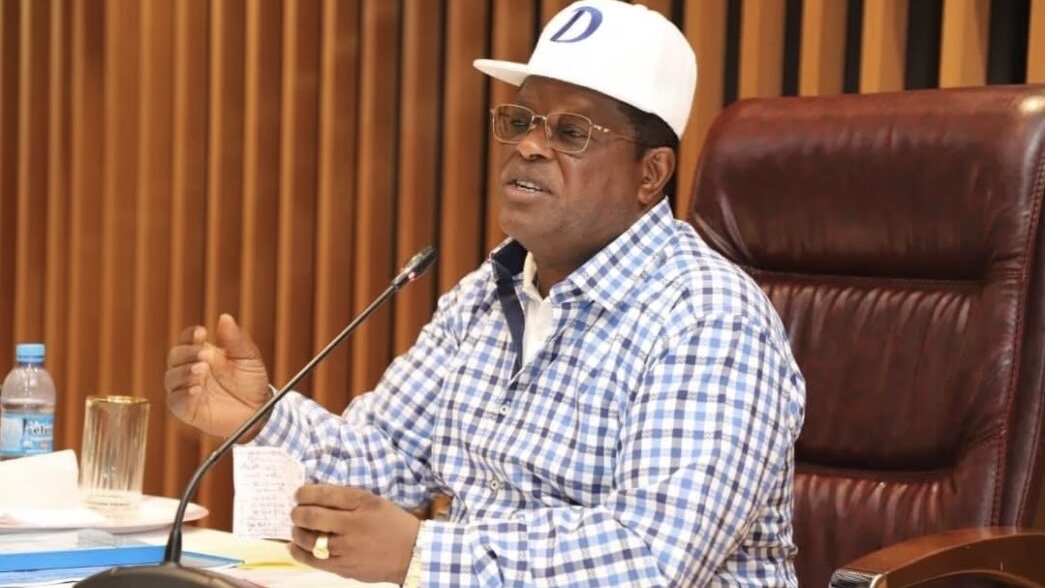
Minister of Works, Dave Umahi, has attributed the flooding observed on sections of the Lagos-Calabar Coastal Highway to blocked underground water channels and acts of vandalism along the project corridor.
Umahi made this known at a press briefing in Abuja on Thursday.
Speaking on the development, the minister said the flooding was largely caused by refuse dumped into underground drainage systems, which obstructed the free flow of water.

“As we speak, people are destroying the fences protecting the Lagos to Calabar Road and stealing the green band wires meant to beautify it. The flooding of the road is also due to underground channels that were blocked by refuse,” he said.
He also decried the growing rate of vandalism targeting critical road infrastructure across the country, describing it as a major setback to ongoing projects.
According to him, suspected vandals were recently apprehended for removing “cat eyes” and electrical devices installed on the Third Mainland Bridge in Lagos.
“Just about two weeks ago, we caught people, and this is the second time we’re catching people removing the cat eyes of electrical devices on the Third Mainland Bridge,” Umahi stated.
The minister further lamented the destruction of concrete barriers along the Abuja-Kano road project, noting that some individuals damage the structures for minimal financial gain.
“If you look at the project everyone is talking about, Abuja to Kano, just go look at the concrete barriers, people are destroying them to take tiny reward,” he added.
Umahi stressed that the Federal Government is committed to building durable infrastructure under President Bola Tinubu’s administration, introducing reinforced concrete technology to enhance the lifespan of roads nationwide.
“I ask anybody to show me a road in this country that was constructed before now and lasted for 10 years,” he said, adding that the reinforced concrete technology would ensure roads last between 50 and 100 years.
Recall that videos of the flooded coastal highway had generated backlash on social media, with many Nigerians questioning the project and stressing the billions of naira reportedly spent per kilometre.