



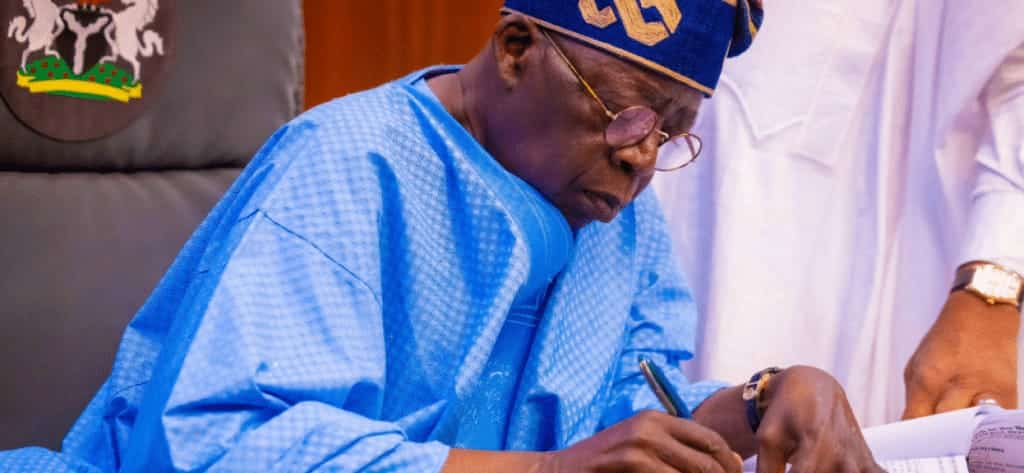
President Bola Tinubu has declined assent to two bills passed by the National Assembly while forwarding two executive bills to the House of Representatives for consideration.
The President’s decision was communicated through letters read by the Speaker of the House, Tajudeen Abbas, during Wednesday’s plenary session.
Tinubu refused to sign the Chartered Institute of Purchasing and Supply Management of Nigeria (Amendment) Bill, 2026, into law, citing concerns over some provisions contained in the legislation.

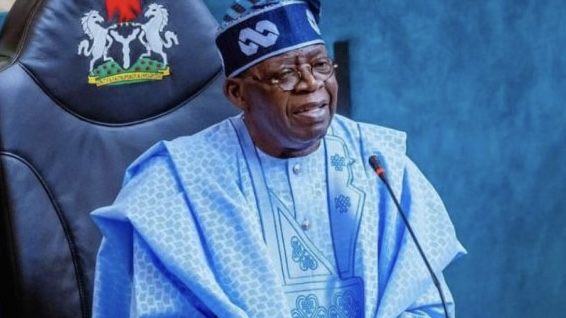
The President said while several parts of the bill were acceptable, some sections attempted to give the institute powers over private companies and other incorporated organisations beyond its legal responsibilities.
He raised objections to provisions that would require organisations to report procurement appointments to the institute, impose penalties on employers who appoint non-members as heads of procurement units, and compel companies to inform the institute when procurement staff are removed.
Tinubu also questioned sections that allowed the institute to take legal action against non-members and carry out inspection visits to companies, saying such measures placed unnecessary restrictions on organisations.
The President stated that the institute does not have the authority to regulate procurement practices across Nigeria and asked lawmakers to address the concerns before sending the bill back for approval.
Tinubu also withheld assent to the Raw Materials Research and Development Council (Amendment) Bill, 2026, due to what he described as structural and drafting problems.
The President said the bill failed to properly capture its main objectives in its long title and contained errors that needed correction before it could become law.
Meanwhile, Tinubu transmitted two other bills to the House of Representatives for consideration.
One of them is the National Senior Secondary Education Commission (Amendment) Bill, 2026, which seeks to improve the administration and governance of public senior secondary education in Nigeria.
The President said the bill was approved by the Federal Executive Council at its meeting on April 30, 2026, and later reviewed by the Federal Ministry of Justice to ensure it followed legal drafting standards.
He asked lawmakers to give the proposed amendment quick attention, saying it would support efforts to strengthen the nation’s education system.
The second executive bill forwarded by the President is the Administration of Criminal Justice Bill, 2026, which seeks to replace the current Administration of Criminal Justice Act, 2015.
The proposed legislation is aimed at addressing delays in criminal investigations and court proceedings while improving the operations of justice institutions.
Tinubu said the new law would help speed up the delivery of justice, protect the rights of suspects, defendants and victims, and improve the fight against crime.
The bill will apply to federal courts and courts in the Federal Capital Territory while giving more support to the Administration of Criminal Justice Monitoring Council.
The President listed challenges under the existing law, including slow trials, limited use of technology in criminal cases, weak cooperation among justice agencies and poor monitoring of compliance.
The proposed changes include a new process for admitting confessional statements, the creation of a national sex offenders register, a Witness Support Fund and the introduction of plea forms to make arraignment procedures easier.
Other reforms include faster handling of no-case submissions, greater use of written witness statements, improved court management and changes to the structure of the monitoring council.
The bill also provides for an Executive Secretary for the council, gives the Attorney-General of the Federation authority to issue implementation rules and introduces measures to prevent criminal trials from starting afresh because of changes involving judges.












Do the right thing Mr president