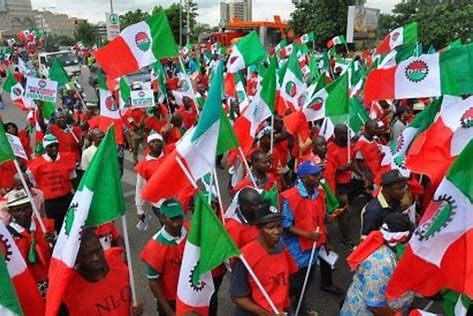




Civil servants under the Joint National Public Service Negotiating Council (JNPSNC), Trade Union Side, have called on the Federal Government and state governments to raise the national minimum wage from ₦70,000 to ₦350,000
The demand was made at the end of a two-day National Retreat and Expanded National Executive Council meeting of the council held in Osogbo, Osun State.
The union said the current economic situation has reduced the purchasing power of workers, leaving many public servants and their families facing hardship.
According to the council, urgent action is needed to help workers cope with increasing prices of food, transportation, housing and other basic needs.
As part of its resolutions, the council urged governments at all levels to approve and implement a new minimum wage of ₦350,000, representing a 400 per cent increase on the current ₦70,000 wage.
It said such a move would provide relief for workers affected by the country’s economic challenges.
The meeting attracted national and state leaders of affiliated unions, including chairmen, secretaries and other officials from across the federation.
The council also called on organised labour and government to begin negotiations on a fresh minimum wage by July 2026, ahead of the next statutory wage review expected in the first quarter of 2027.
It said starting discussions early would help avoid the delays and disputes that often arise during wage review periods.
JNPSNC expressed concern over the implementation of the current ₦70,000 minimum wage in some states.
The union said several state governments have not fully carried out the consequential salary adjustments that should accompany the wage increase.
It warned that its national leadership would take further steps against any state government that fails to implement the approved salary adjustments for workers.
The council also criticised the continued failure of some federal and state governments to carry out agreements reached through collective bargaining. It noted that delays in implementing such agreements have created distrust between workers and government authorities.