


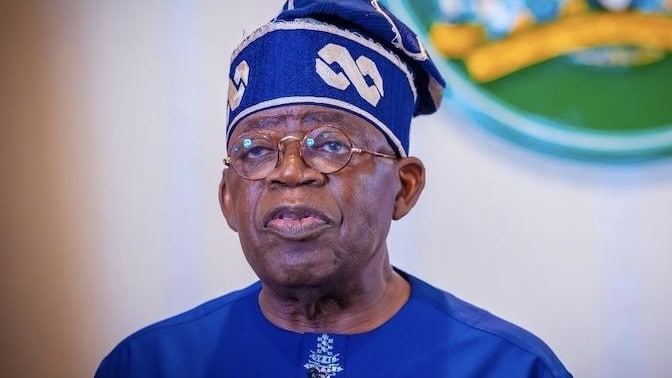
President Bola Tinubu has refused to sign the National Identity Management Commission (Establishment) Bill, 2026, pointing to several errors and gaps in the document.
The decision was conveyed in a letter sent to the House of Representatives and read during plenary by Deputy Speaker Benjamin Kalu, who presided over the session on Tuesday.
In line with Section 58(4) of the 1999 Constitution, the president returned the bill to lawmakers for further work, explaining that the executive found problems that must be corrected before it can become law.

He noted that the title of the bill does not clearly reflect that it seeks to both repeal and reintroduce the existing law guiding the commission.
He also pointed out issues in Section 4(2), where some board members were wrongly described as part-time appointees of the president instead of being listed as members by virtue of the offices they already hold.
The president also raised concerns about Section 4(1)(b), which creates four executive commissioner positions but does not state who should appoint them or the qualifications required for the roles.
He explained that while the bill lists requirements for the board chairman, it fails to do the same for these key officials.
Another issue identified was the requirement for Senate confirmation of the chairman and executive commissioners.
The president said this clashes with constitutional provisions that give him the authority to appoint heads of certain government agencies without such approval.
He added that this condition could limit his powers under the Constitution, since only specific appointments are required to go through Senate confirmation.
Further observations included uncertainty in Section 4(1)(d) about whether the Director-General is a full member of the board, serves only as secretary, or holds both roles.
The president also faulted how the bill handles regulatory powers, noting that separating rules and guidelines into different sections creates confusion.
He said the wording suggests guidelines can only be issued after regulations are made, which could restrict how the commission operates.
He pointed out that the bill mentions a “supervising authority” but fails to clearly establish or define such an office within its provisions. According to him, the term is introduced without being properly used throughout the document.
In addition, he described Section 37 as incomplete and unclear, stating that it does not provide a workable legal meaning despite suggesting that the law should take priority over others in case of conflict.
Overall, the president concluded that these issues make the bill defective in its current form and require lawmakers to review and correct the identified areas before it can be reconsidered.